Best Harness for Anxious and Fearful Dogs
Summary: A practical guide to choosing and introducing a secure harness for dogs that freeze, startle, spin, or try to retreat on walks.
The best harness for an anxious dog should do two things at once: reduce the chance of backing out and remain comfortable enough that the dog can learn to wear it calmly. More coverage is not automatically better. The goal is the lowest level of equipment that safely matches the dog’s escape risk.
Start with the dog’s actual behavior
“Anxious” can describe very different walking patterns. Notice what your dog does when worried:
- Freezes: stops moving and refuses to continue;
- Retreats: plants the front feet and moves backward;
- Spins: turns rapidly and may wrap the leash around the body;
- Lunges: moves suddenly toward or away from a trigger;
- Shuts down during dressing: avoids the harness or resists anything going over the head.
A dog that retreats or spins has a higher escape risk than one that simply walks slowly. A head-shy dog may also need a neck buckle or a slower introduction.
Features that matter most
Rear retention coverage
A third strap positioned behind the widest part of the ribcage can reduce the path for a dog to reverse through the harness. It must still be correctly sized and adjusted.
Multiple adjustment points
Anxious dogs often have slim waists or tense body posture. Independent adjustment around the neck, chest, and rear section helps create a closer match than a single broad size range.
Low bulk and soft contact areas
Some fearful dogs are sensitive to pressure or unfamiliar gear. A lighter design can reduce the amount of new sensation, while smooth edges and padding at key contact areas may reduce rubbing.
Useful leash connections
A back attachment is straightforward for calm walking. A front connection can help redirect some dogs, but it is not a substitute for loose-leash training and should not twist the harness across the body.
A short control handle
A top handle can help during a brief close-control moment, such as passing through a doorway. It should not be used to hold the dog off the ground for an extended period.
Which Huntboo coverage level fits?
For a dog that needs escape-resistant security with relatively light coverage, start by comparing the HalfGuardian Reflective. It uses a three-strap design, five adjustment points, front and back leash connections, and a padded handle.
For dogs that tolerate or benefit from broader chest-and-belly coverage, the AllShieldPro offers six adjustment points and a more structured panel.
If the dog regularly walks in wet or dirty environments, HalfGuardian Dustproof adds a water-repellent, scratch-resistant outer material.
A calm introduction plan
Do not make the first experience a long walk.
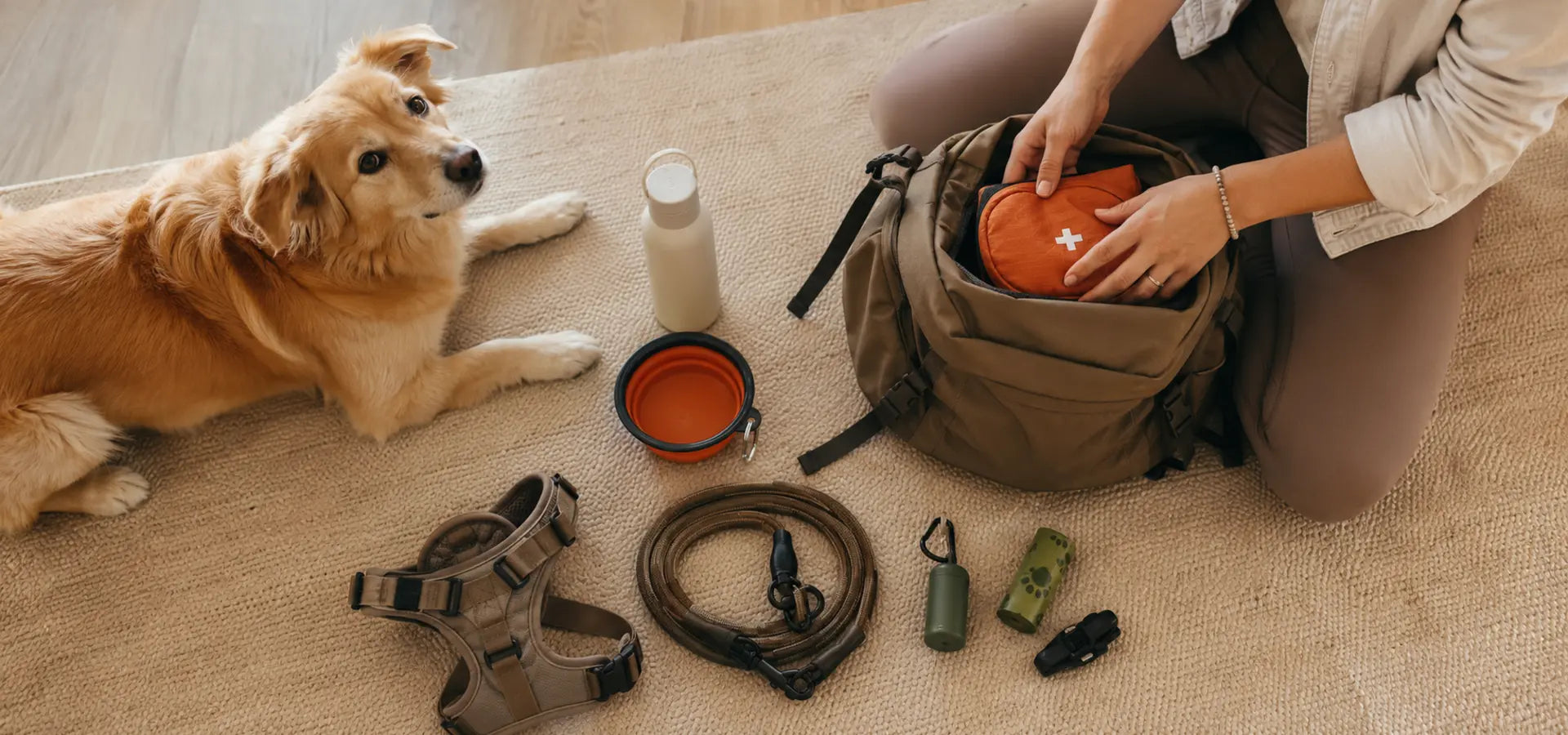
- Place the harness on the floor and reward voluntary investigation.
- Lift it briefly, reward, and put it away.
- Touch it gently to the shoulder or side without fastening.
- Put it on for a few seconds indoors, then remove it.
- Build to calm movement around the home.
- Try a short, quiet walk before using it in a busy environment.
Move at the dog’s pace. If food is refused, the dog may be too stressed for the current step.
Fit without over-tightening
Measure the lower neck and widest chest while the dog is standing naturally. Use the product-specific size chart. After adjustment, check that the dog can breathe, walk, sit, and turn normally. Look for excess movement when the harness is guided forward, not only side-to-side looseness.
Recheck after five to ten minutes because straps may settle into the coat. Inspect the armpits, sternum, and belly for rubbing after each early session.
Build a safer walking system
For high flight risk, discuss a backup connection and two-point handling with a qualified trainer. Choose quieter times and routes, keep identification current, and maintain enough distance from known triggers. If fear is severe, sudden, or worsening, speak with a veterinarian or qualified behavior professional.
A harness supports safety; it does not treat anxiety. The best result comes from secure equipment, gradual exposure, and predictable handling. Continue with Safer Walks for Anxious and Rescue Dogs.