Safer Walks for Anxious and Rescue Dogs
A newly adopted or anxious dog may react to ordinary sounds, unfamiliar people, traffic, or sudden movement in ways that are difficult to predict. The goal of a safer walk is not to push the dog through fear. It is to reduce avoidable risk and build a routine the dog can understand.
Quick answer
Begin with a quiet, predictable route; use correctly fitted equipment; keep the first walks short; create distance at early signs of stress; and carry a simple escape-response plan. The goal is not to force confidence, but to reduce avoidable risk while the dog learns a repeatable routine.
Behavior can have medical as well as emotional causes. If fear appears suddenly, is severe, or is accompanied by pain or other changes, consult a veterinarian. A qualified reward-based trainer or veterinary behavior professional can also help with an individual plan.
Start with a predictable environment
For the first walks, choose a quiet route with space to change direction. Walk at lower-traffic times and keep the outing short enough that the dog can remain below the point of panic. Repeating a familiar route can be more useful than constantly adding new stimulation.
Use secure, correctly fitted equipment
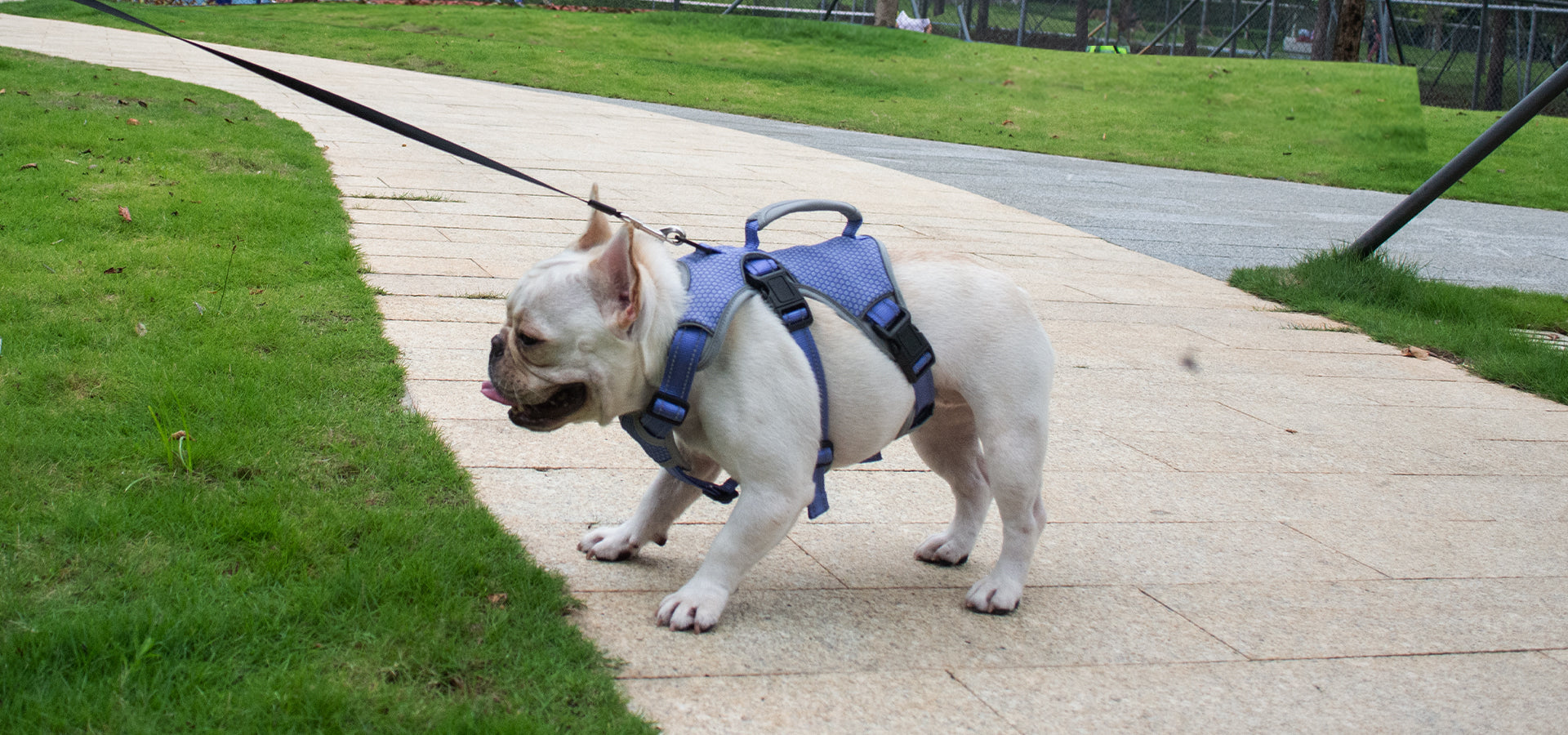
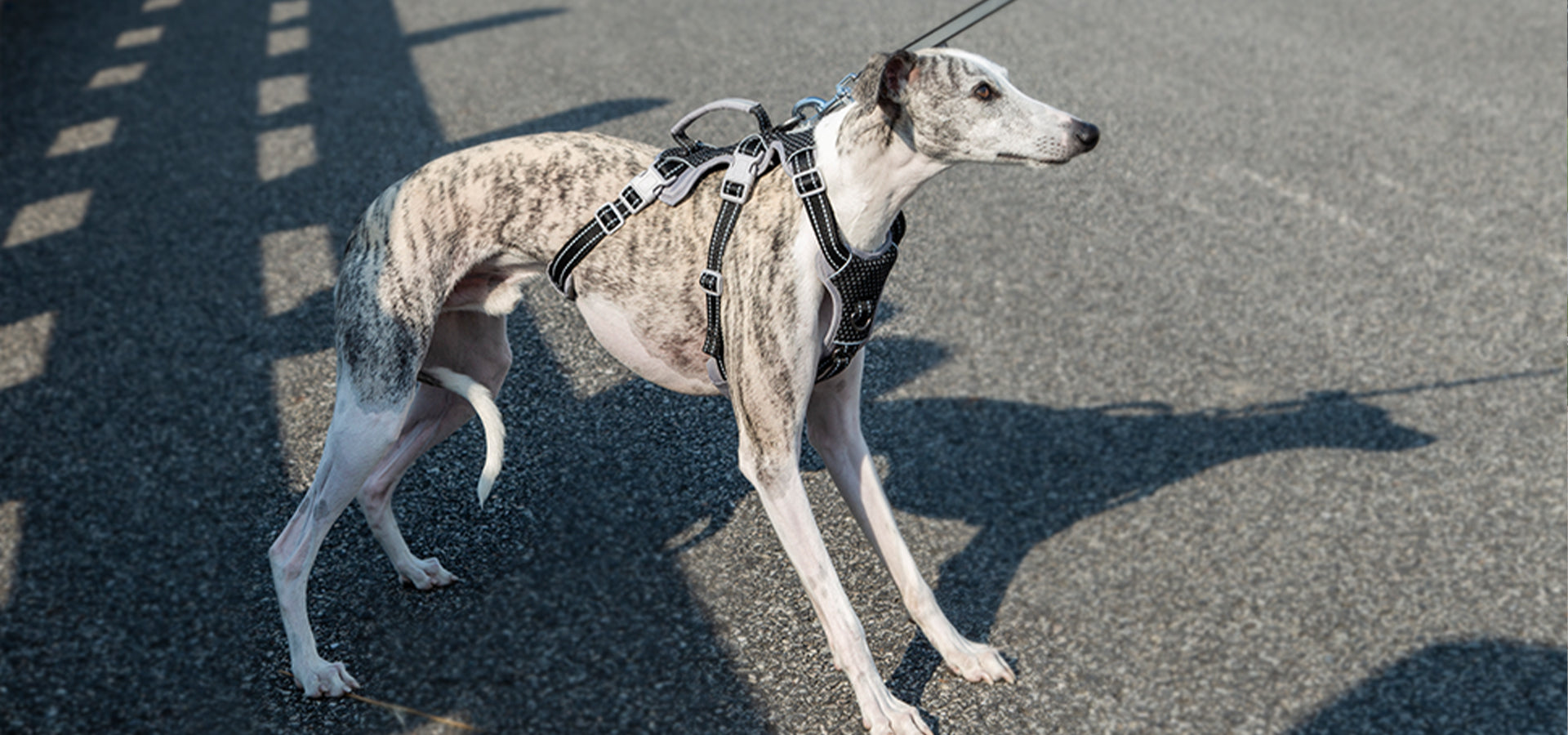
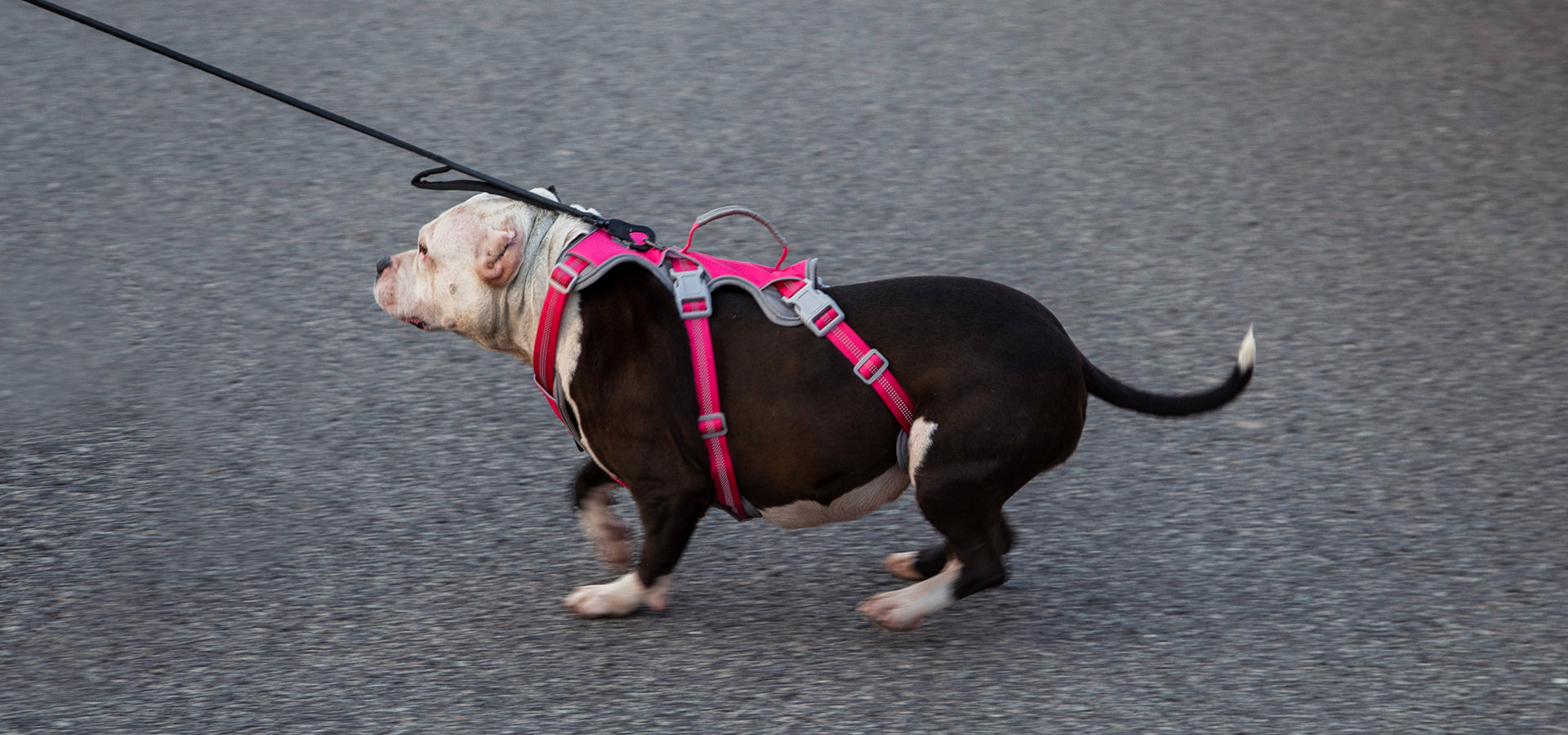
An anxious dog may freeze, spin, or pull backward when startled. A three-strap or higher-coverage harness can help reduce backing out when it is correctly sized and adjusted. No harness is a guarantee, so inspect every buckle and strap before leaving home.
- Measure the dog instead of relying on weight or breed alone.
- Position the rear strap behind the widest part of the ribcage.
- Keep straps flat and use the two-finger check.
- Attach the leash before opening the exterior door.
- For a high-flight-risk dog, ask a qualified professional about an appropriate secondary safety connection.
See our Find Your Fit guide to compare coverage levels.
Create a calm departure routine
Prepare treats, waste bags, and keys before putting on walking gear. Keep the doorway quiet and avoid building excitement. Practice clipping the leash and waiting briefly inside. A predictable sequence can help the dog understand what happens next.
Learn the dog’s early stress signals
Do not wait for lunging or panic. Earlier signs can include slowing down, scanning, lip licking, turning away, lowering the body, refusing food, or repeatedly looking behind. These signals vary between dogs.
When you notice tension, create distance. Cross the street, turn around, move behind a visual barrier, or pause in a quieter area. Distance is often more helpful than trying to make the dog “face” the trigger.
Keep the leash supportive, not constantly tight
A short enough leash helps prevent sudden access to hazards, but constant tension can add pressure and make movement less predictable. Aim for a secure grip and a small amount of slack when the environment allows. Avoid wrapping the leash around your hand.
Use food thoughtfully
If the dog can eat, small high-value treats can reinforce checking in, turning with you, or calmly noticing a trigger from a safe distance. If the dog cannot take food, the situation may be too difficult. Move farther away rather than insisting on a behavior.
Do not rush progress
Confidence is not linear. A dog may handle one route well and struggle the next day. Weather, sleep, noise, pain, and previous stress can change what the dog can manage. Short successful walks are often more valuable than long overwhelming ones.
Have a simple safety plan
- Keep identification and microchip information current.
- Carry a recent photo of the dog.
- Know where you can safely create distance on the route.
- Avoid retractable leashes in situations where precise control matters.
- Tell regular walkers about known triggers and the equipment routine.
What a successful walk looks like
Success may be ten calm minutes, recovering after a distant noise, or choosing to look back at the handler. The objective is not perfect obedience. It is a safer, more predictable experience that gives the dog room to build confidence.
If you need help selecting a secure harness for your dog’s shape and escape risk, contact the Huntboo support team with neck and chest measurements.
Continue reading
Compare lightweight, balanced, and maximum-coverage options in our Find Your Fit guide.