
Article: Grooming Checks That Help Prevent Harness Rubbing

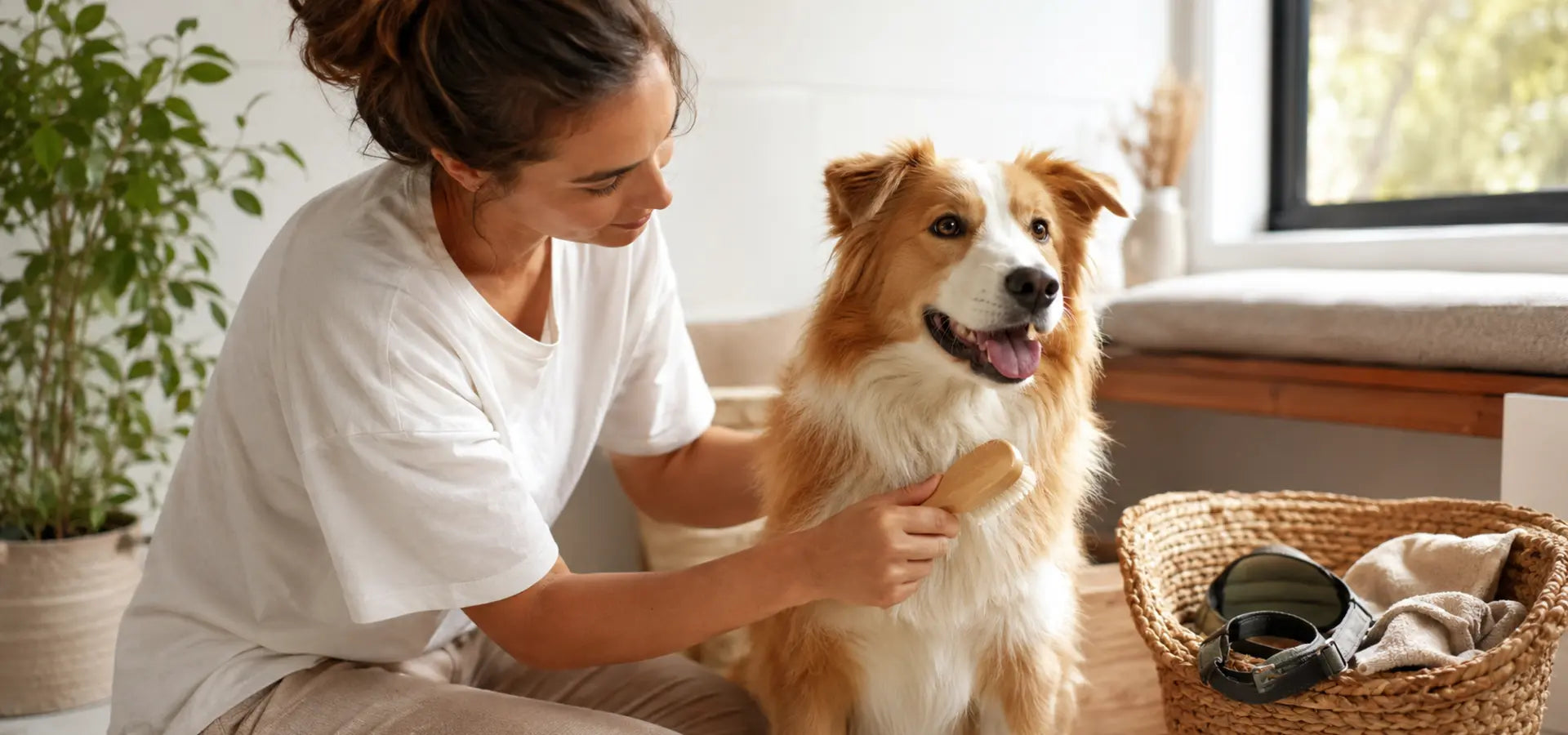
Grooming Checks That Help Prevent Harness Rubbing
Quick answer
Check the neck, chest, armpits, and belly under the straps. Remove tangles, keep equipment clean and dry, and reassess fit after grooming or coat changes.
Why this matters
Wet, matted, thick, or recently clipped coats change how straps sit. Run your fingers beneath each strap, keep hair out of buckles, and watch the harness while the dog walks, turns, and sits. Inspect paws and nails too, because discomfort can change gait.
What to do next
Stop using equipment that causes pain, broken skin, redness, hair loss, or repeated scratching. Persistent irritation requires veterinary assessment.
Build it into your routine
Keep the process calm and repeatable. Check your dog, equipment, and surroundings before leaving, then inspect contact points after the walk. Adjust the plan to the individual dog rather than forcing a fixed distance or schedule.
Related: Find Your Fit · Size Guide · How to Choose an Escape-Proof Dog Harness
Prepared by the Huntboo Team for practical walking safety. This educational content does not replace veterinary or professional behavioral advice.