Why Dogs Back Out of Harnesses—and How to Stop It
Summary: Learn why dogs reverse out of harnesses, how fit and design contribute, and what to change before the next walk.
Dogs rarely back out of a harness for no reason. Some are frightened by traffic, strangers, dogs, or sudden noises. Others have learned that reversing creates space. A few simply have a body shape that makes conventional harnesses easier to slip.
Understanding the cause helps you solve the problem without relying on tighter straps alone.
How a dog backs out of a harness
The common escape sequence looks like this:
- The dog stops and lowers their body.
- The handler and leash continue forward.
- The dog moves backward while the harness is pulled toward the shoulders.
- A loose chest section opens around the elbows.
- One or both front legs slip through, followed by the head.
A conventional two-strap harness usually circles the neck or shoulders and the ribcage. If the rib strap can slide over the widest part of the chest, there may be little left to retain the dog.
The five most common causes
1. The harness is too loose
Loose does not always look obviously loose. Thick fur can hide excess space, and a harness that seems secure while the dog stands normally may shift when pulled forward.
2. The harness shape does not match the dog
Dogs with deep chests, narrow waists, small heads, flexible shoulders, or unusual proportions can be difficult to fit using breed or weight alone. Greyhounds and Whippets are obvious examples, but mixed breeds can have the same challenge.
3. The dog is over threshold
Fear changes movement. A dog that normally walks calmly may crouch, spin, or pull backward when startled. Equipment cannot remove the trigger; it only helps reduce risk while you work on behavior and distance.
4. The leash angle is working against the harness
Continuous forward tension while the dog reverses can pull the harness toward the exact direction needed for escape. Move with the dog when safe, shorten distance without jerking, and avoid turning the situation into a tug-of-war.
5. Straps loosen during use
New webbing may settle, hardware can shift, and the dog’s coat or body condition can change. Fit is not a one-time task.
How to stop a dog from backing out
Re-measure from the dog, not the old harness
Measure the lower neck and the widest part of the ribcage with the dog standing. Compare both measurements with the exact product chart. If the dog falls between sizes, contact the manufacturer for fit help rather than guessing. Use the Huntboo Size Guide as a measuring reference.
Adjust in a stable order
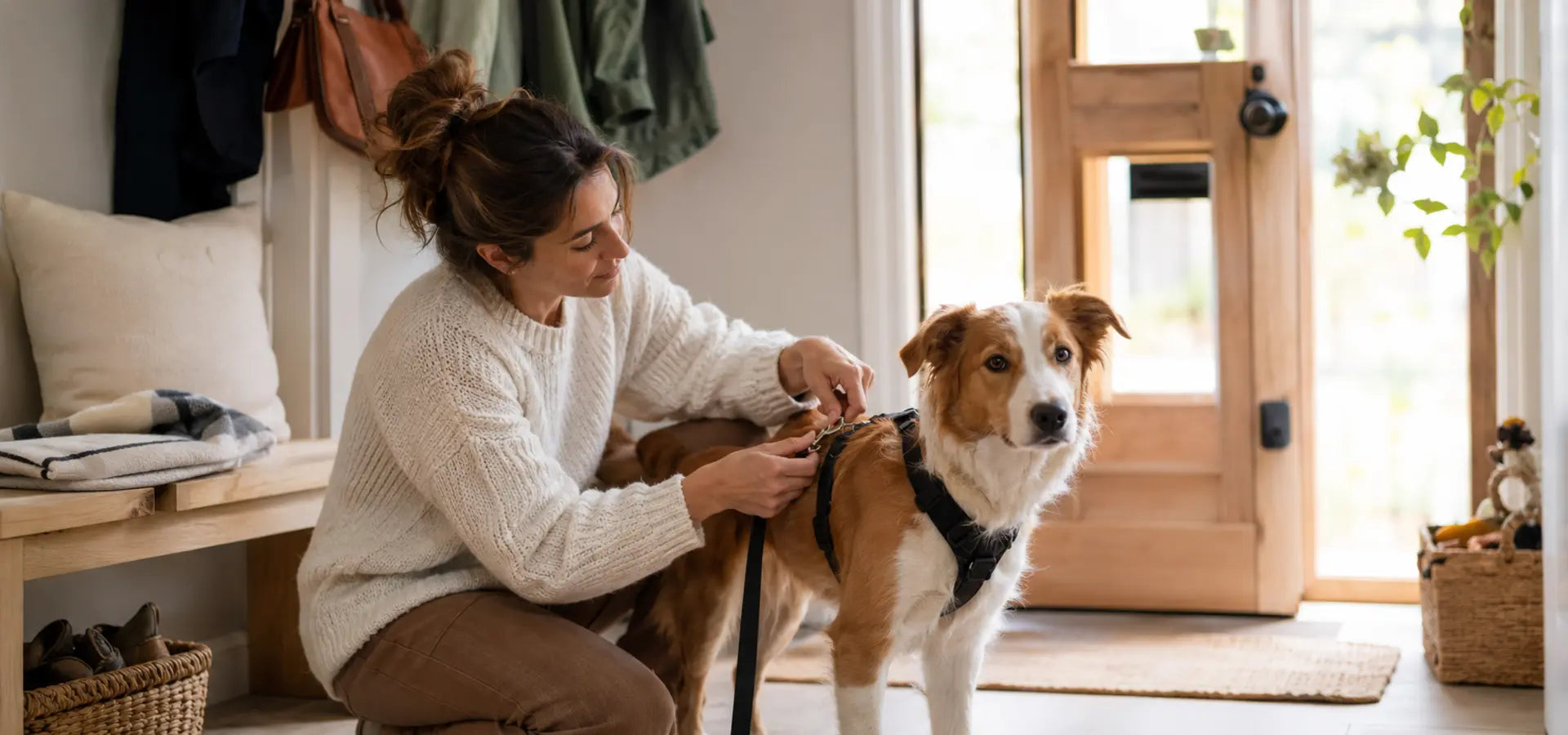
Center the harness, adjust the neck first, then the main chest section, and finally the rear retention strap. Keep straps flat. The rear strap should sit behind the widest part of the ribcage while remaining clear of sensitive abdominal tissue.
Consider a three-strap harness
A three-strap harness adds a rear belly strap that can make it harder for the harness to slide over the ribcage and shoulders. The HalfGuardian Reflective uses this layout in a lightweight format. Dogs needing broader coverage can be compared through the Huntboo harness collection.
Introduce the harness gradually
Let the dog investigate it. Reward calm contact, brief wearing, and movement indoors before asking for a full walk. Stop if the dog freezes, scratches persistently, or appears distressed. Some dogs need several short sessions to become comfortable with an extra belly strap.
Add a backup for high-risk dogs
For a newly rescued or known flight-risk dog, a separate safety connector between the harness and a properly fitted collar can add redundancy. The backup should not tangle, tighten dangerously, or carry constant tension. Ask a qualified trainer for help if you are unsure.
Work on the trigger
If the dog backs away from buses, strangers, other dogs, or handling, create more distance and reward calm observation. Equipment management and behavior work should happen together.
What not to do
- Do not tighten the harness until breathing or shoulder movement is restricted.
- Do not choose size by weight or breed alone.
- Do not intentionally startle the dog to “test” the harness.
- Do not assume “escape-proof” means escape is impossible.
- Do not use the top handle for prolonged suspension unless the product is specifically designed and fitted for that purpose.
A 30-second pre-walk check
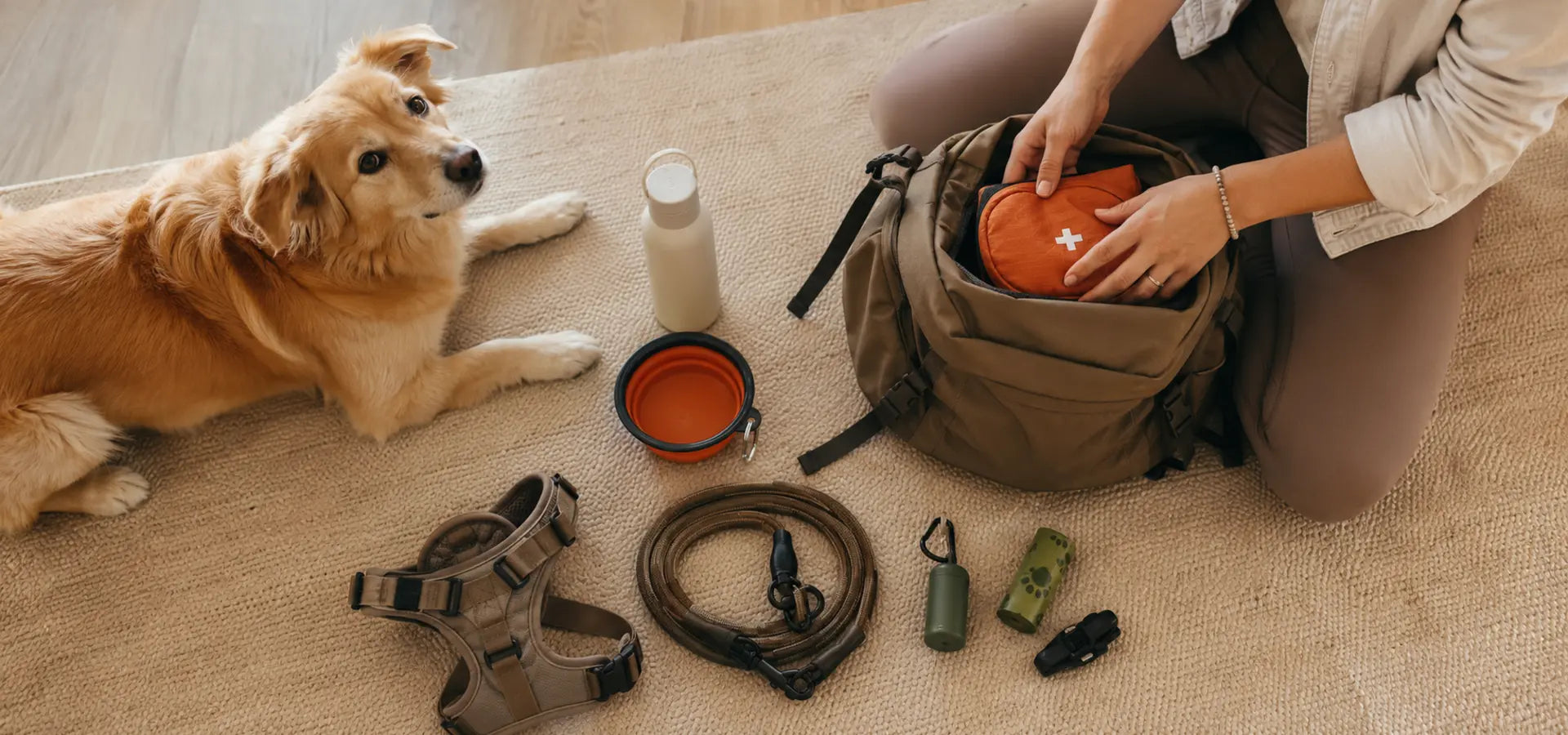
Before opening the door, check every buckle, the neck opening, both sides of the chest, the rear strap position, the leash attachment, and any backup connector. Repeat the fit check after grooming, weight change, or a wash.
If your dog has already escaped once, treat it as useful information: the current combination of fit, design, and handling was not sufficient for that situation. Correct all three before the next walk. For more help, read How to Choose an Escape-Proof Dog Harness.