Skip to content

Cart

Your cart is empty

Secure coverage for confident walks

Escape-Proof Dog Harnesses for Dogs That Back Out

Some dogs can reverse out of a standard harness when frightened, startled, or determined to escape. Huntboo escape-proof dog harnesses use extended coverage, a secure third belly strap, and multiple adjustment points to help reduce backing-out risk while keeping daily walks comfortable. Compare lightweight, full-back, maximum-coverage, and flexible designs to find the right fit for anxious, rescue, and escape-prone dogs.

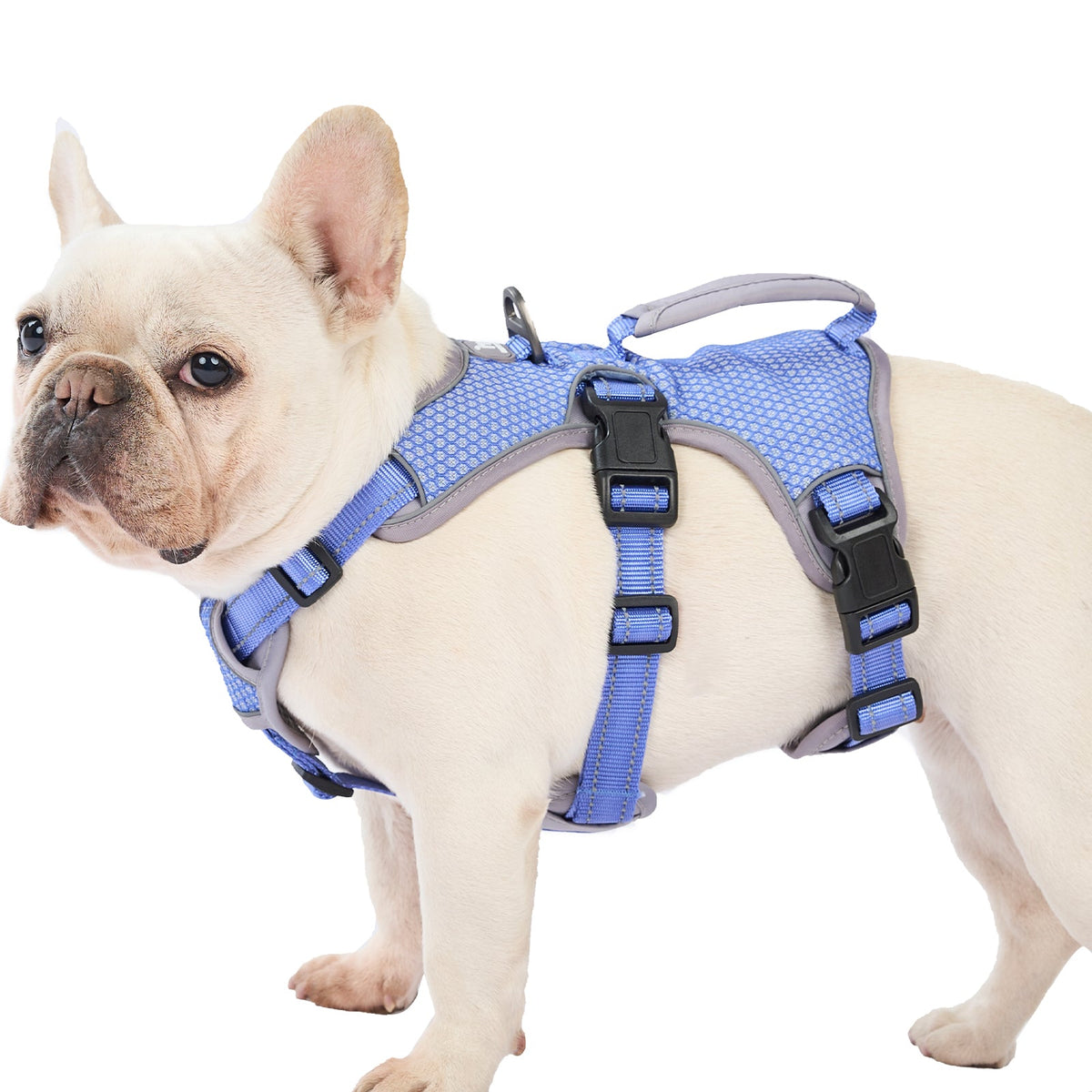
Huntboo escape-proof dog harness with a secure third belly strap

Sort by

6 products

Huntboo HalfGuardian Reflective escape-proof dog harness in teal, product view on a clean background #color_teal
Color
Huntboo HalfGuardian Dustproof dog harness in black, product view on a clean background #color_black
Color
Huntboo BackSecure Reflective dog harness in tech blue, product view on a clean background #color_tech blue
Color
Huntboo BackSecure Dustproof dog harness in black, product view on a clean background #color_black
Color
Huntboo AllShieldPro Reflective escape-resistant dog harness in black on a clean background #color_black
Color
Huntboo Two-in-OneGuard Reflective dog harness in black, product view on a clean background #color_black
Color

Compare coverage

Choose the right escape-proof dog harness

Start with your dog’s escape risk, activity level, preferred material, and support needs. Swipe on mobile to compare all six options.

HarnessCoverageBest forWhy choose it
HalfGuardian ReflectiveMedium–highActive everyday walksLightweight three-strap security with reflective details Explore
HalfGuardian DustproofMedium–highLightweight easy-care useThree-strap coverage with a water-repellent, scratch-resistant outer layer Explore
BackSecure ReflectiveHighAnxious and rescue dogsStable extended coverage with reflective visibility Explore
BackSecure DustproofHighSecure easy-care walksStable extended coverage with easy-clean outer fabric Explore
AllShieldPro ReflectiveMaximumHigher escape risk and assistFull chest-and-belly coverage with balanced support Explore
Two-in-OneGuard ReflectiveMedium–highFlexible daily useTwo H-shaped wearing configurations for changing needs Explore

Buy by coverage, not guesswork

How Escape-Proof Dog Harnesses Work

An escape-resistant harness adds a secure third strap behind the widest part of the ribcage. When a dog stops, lowers the shoulders, or pulls backward, that rear strap creates another point of security that is harder to draw forward over the chest. Multiple adjustment points help the harness follow the dog’s actual proportions, while stable body coverage helps reduce twisting. These features help reduce backing-out risk, but no harness is a substitute for correct sizing, regular fit checks, supervision, and responsible leash handling.

Why Dogs Back Out of Standard Harnesses

A frightened or highly motivated dog may plant the front feet, lower the head and shoulders, and reverse against leash pressure. A loose neck opening, a chest strap that shifts, or a body section with too little rear coverage can then slide forward. This pattern is common with anxious dogs, newly adopted rescue dogs, dogs startled by traffic or noise, and dogs still learning to walk comfortably on leash.

The solution is not simply tightening every strap. Over-tightening can restrict movement and create rubbing. A more secure setup combines the right coverage level with accurate measurements and careful adjustment.

How to Choose the Right Coverage

Lightweight everyday security: HalfGuardian uses three-strap, half-back coverage for active dogs that need added security without the bulk of a full-back design. Reflective and easy-care Dustproof versions share the same basic coverage purpose.

Stable full-back coverage: BackSecure offers more coverage for anxious and rescue dogs, with an adjustable fit designed for dogs that may freeze, spin, or reverse during a walk.

Maximum coverage: AllShieldPro combines full chest-and-belly coverage with multiple adjustment points for dogs with higher escape risk or situations requiring brief, controlled assistance.

Flexible configuration: Two-in-OneGuard uses an adjustable H-shaped design with two wearing configurations for owners whose comfort or coverage needs change across daily walks, training, and outdoor activities.

Fit and Measurement Guidance

  1. Measure the lower neck and the widest part of the chest while your dog is standing naturally.
  2. Use the size chart on the specific product page; do not rely on breed, weight, or a previous harness size alone.
  3. Leave room for about two fingers beneath each strap and keep the webbing flat.
  4. Position the rear belly strap behind the ribcage and away from the front-leg area.
  5. Before the first outdoor walk, gently test backward pressure indoors and confirm that the harness stays in position without restricting movement.

Recheck the fit after several minutes of movement and whenever your dog’s coat, weight, or body shape changes. For detailed steps, use the dog harness size and fit guide or contact Huntboo support with your dog’s measurements.

Harnesses for Anxious and Rescue Dogs

Dogs adjusting to a new home or unfamiliar environment may react unpredictably to loud sounds, traffic, other dogs, or sudden handling. Choose coverage based on the dog’s current behavior rather than appearance alone, introduce the harness in a calm indoor setting, and pair it with gradual, positive exposure. A secondary safety connection may be appropriate for a high-flight-risk dog; ask a qualified trainer or veterinarian for guidance when needed.

For a broader overview, compare every Huntboo family in Find Your Fit, or read how to choose an escape-proof dog harness before ordering.

Escape-Proof Harness FAQ

Can any dog harness be completely escape-proof?

No. Escape-proof describes a design goal, not an absolute guarantee. Correct sizing, strap adjustment, leash handling, supervision, and regular hardware checks are essential.

What is the purpose of the third belly strap?

It sits behind the widest part of the ribcage to add another point of security when a dog reverses. It should lie flat, remain comfortable, and never restrict the front legs.

Which coverage level should I choose?

Choose lightweight coverage for active everyday use, full-back coverage for greater stability, and maximum coverage for higher escape risk. Use the comparison above and the product-specific size chart before ordering.

How often should I check the fit?

Check before every walk and again after the dog has moved for several minutes. Puppies, newly adopted dogs, and dogs with weight or coat changes may need more frequent adjustment.